The Real Cost of English Teacher Turnover
When an English teacher leaves, the cost is rarely limited to recruitment. Turnover affects students, parents, staff morale, lesson quality, and the trust a school has worked hard to build.
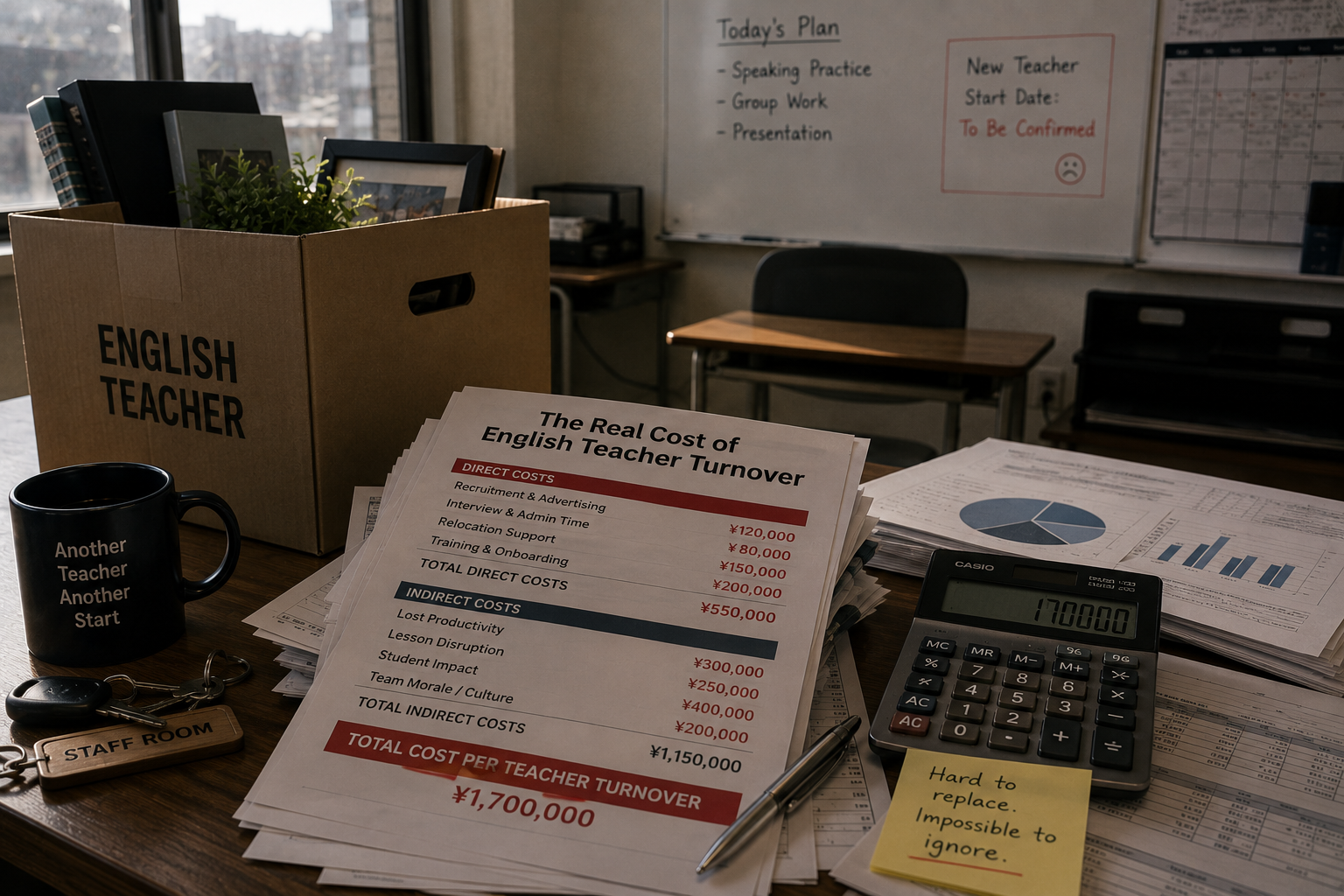
Teacher turnover can look like a hiring problem from the outside. Inside the school, it is often a continuity problem, a parent confidence problem, and a staff workload problem all at once.
Turnover costs more than hiring
Many schools first measure turnover by the visible expenses: job ads, interviews, onboarding time, trial lessons, and manager attention. These costs matter, but they are only part of the picture.
The deeper cost appears when classes lose rhythm, parents begin asking questions, and staff must carry extra responsibility while the school searches for a replacement.
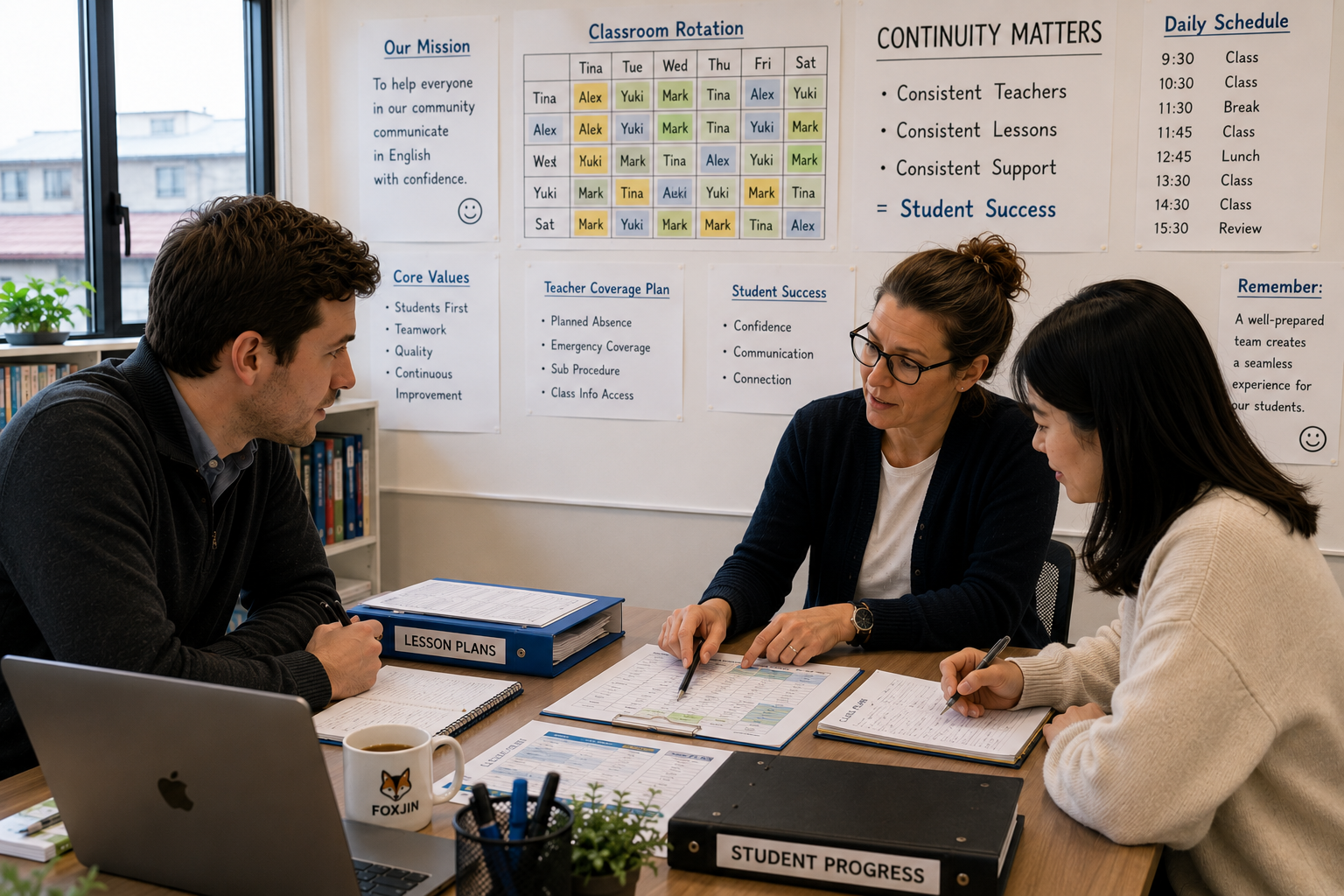
The most expensive part of turnover is often the loss of continuity. Foxjin School Media
Students lose learning rhythm
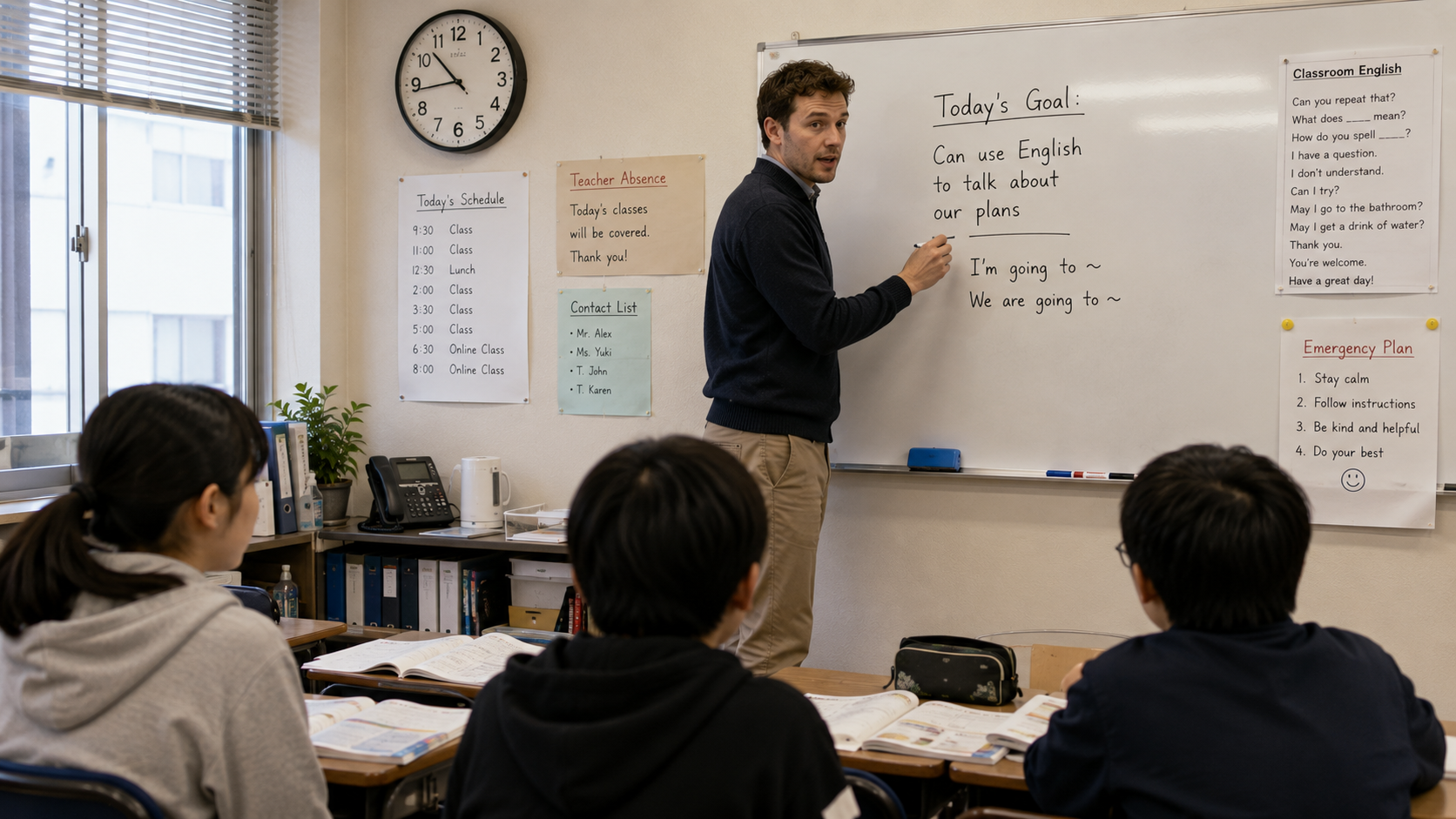
Students build confidence through routine. They learn the teacher’s style, expectations, classroom habits, and pacing. When that relationship changes suddenly, the class may need time to reset.
A strong new teacher can still succeed, but the transition must be handled carefully. Without continuity, students may feel less settled and lesson momentum may slow down.
Continuity protects learning
A smooth transition helps students stay focused on learning instead of adjusting repeatedly to disruption.
Parents notice instability quickly
Parents may understand that staff changes happen, but they pay close attention to how the school manages those changes. If the transition feels rushed, unclear, or repeated, confidence can weaken.
Clear communication and stable class coverage help show parents that the school is prepared, responsible, and serious about the student experience.
Staff carry the hidden workload
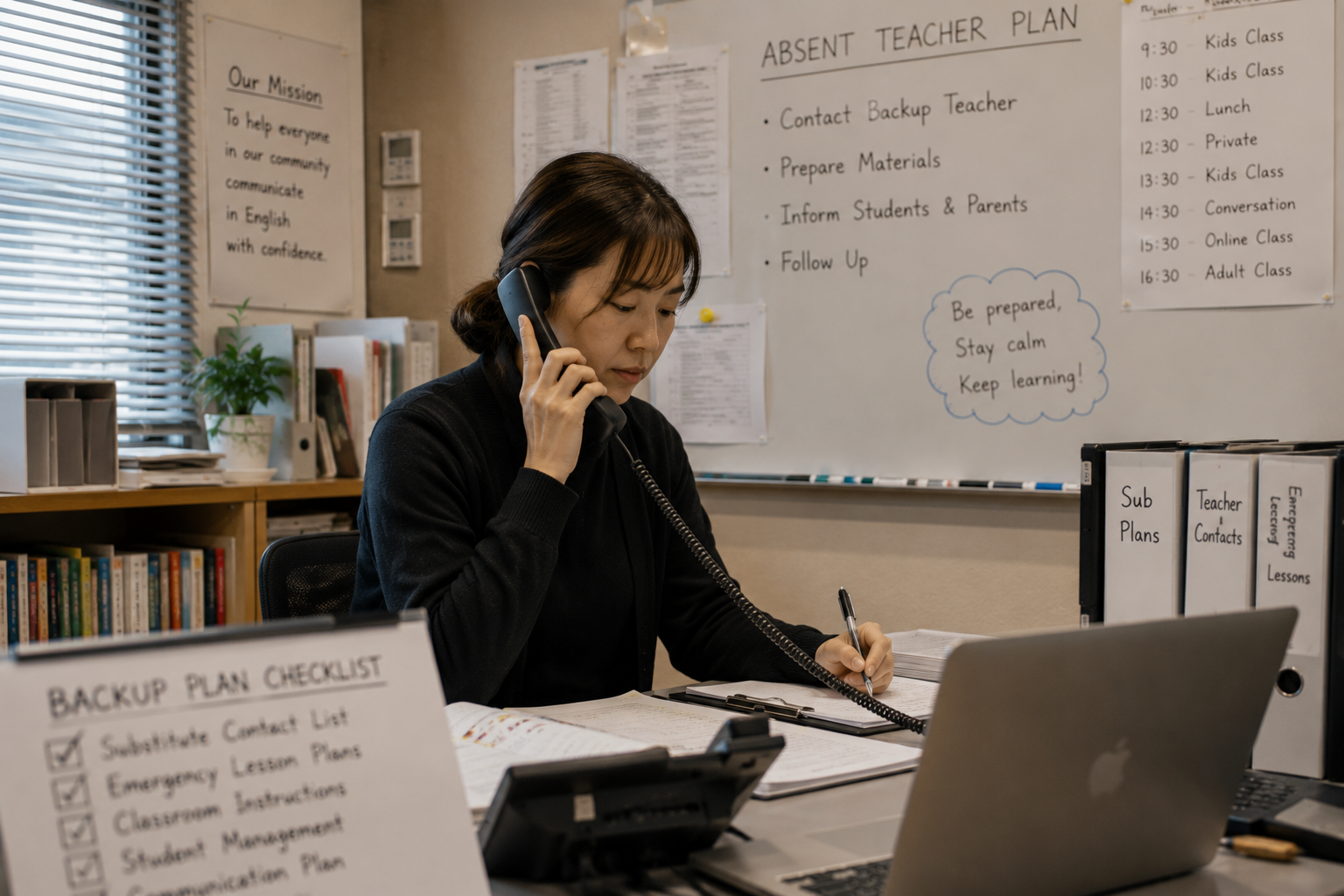
Turnover often creates extra work for the people who remain. Managers may need to rewrite schedules, handle interviews, communicate with parents, prepare materials, train replacements, and cover emergencies.
Front desk staff may also become the first point of contact for parent concerns. Without support, turnover can quickly become a team-wide stress problem.
Why bridge support matters
Schools do not always need an immediate permanent replacement. Sometimes they need a bridge: temporary classroom support that keeps lessons moving while the school makes a careful long-term decision.
Bridge support reduces pressure. It gives owners and managers time to hire properly instead of reacting out of panic.
Key takeaways
- Teacher turnover costs more than recruitment fees.
- Students can lose rhythm when transitions are sudden.
- Parents notice instability quickly.
- Remaining staff often carry the hidden workload.
- Temporary support gives schools time to hire carefully.
Where Foxjin fits
Foxjin helps schools maintain classroom continuity during teacher turnover, staffing gaps, and sudden schedule pressure. The goal is to protect lessons while the school handles the bigger staffing decision properly.
With direct English teacher support, schools can reduce panic, protect parent trust, and keep students learning while the next step becomes clear.
Managing teacher turnover?
Foxjin helps English schools maintain classroom continuity while they work through staffing changes and long-term hiring decisions.
Contact Foxjin