How Schools Can Handle Staff Shortages
Staff shortages can place immediate pressure on lessons, parents, schedules, and school teams. The schools that respond best are the ones that prepare before the shortage becomes urgent.

A staff shortage rarely affects only one part of a school. It can change the schedule, increase pressure on remaining staff, create parent communication challenges, and disrupt the classroom experience.
Why shortages spread quickly
When one teacher or staff member is unavailable, the school must often rearrange several other parts of the day. Classes may need coverage, rooms may need adjustment, staff may need to call parents, and managers may need to rewrite schedules.
This is why a shortage is not only a staffing issue. It is an operations issue that can affect the entire school.
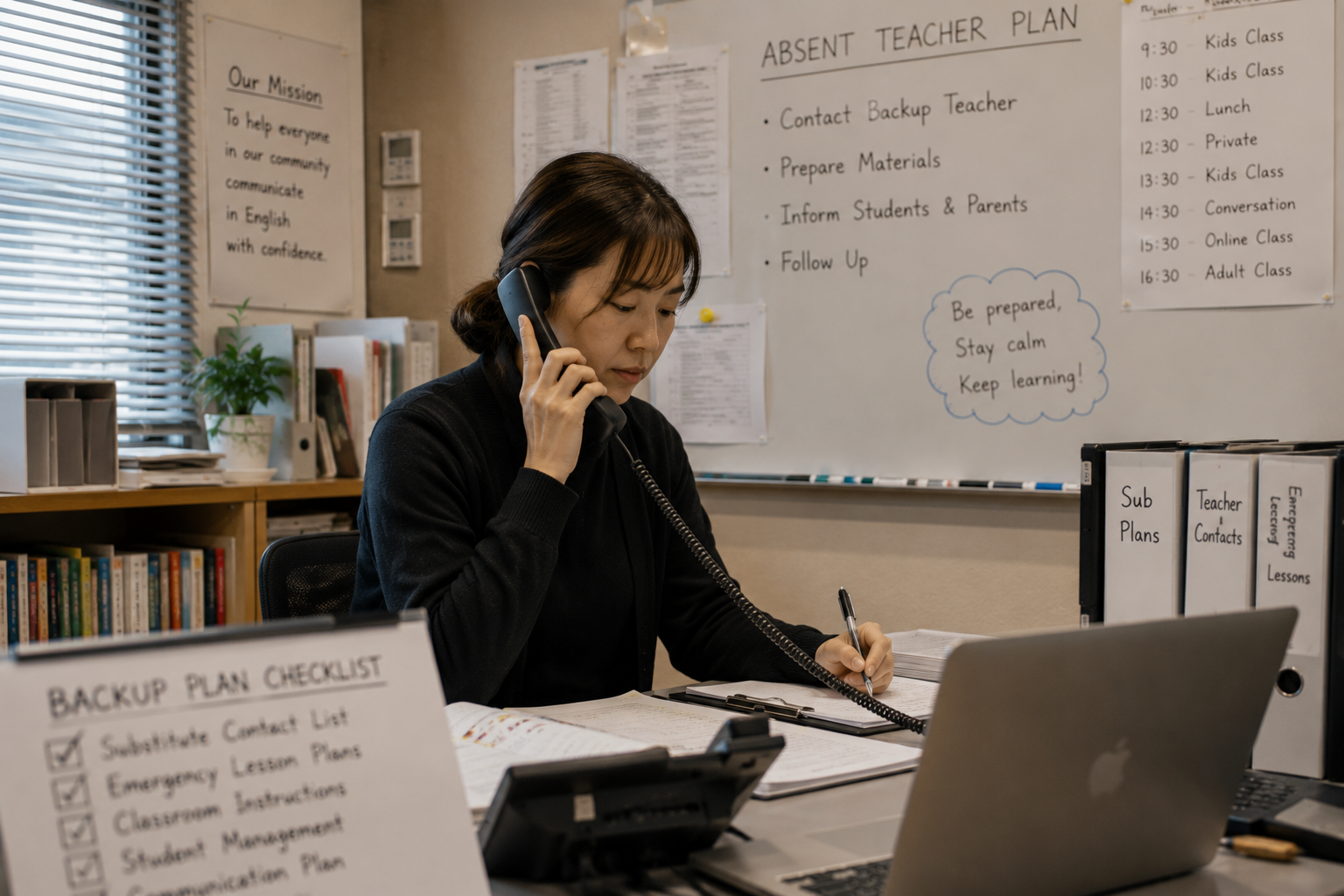
A staff shortage becomes easier to manage when the school has a calm next step. Foxjin School Media
The first response matters
The first few decisions often shape the rest of the day. Schools need to know which classes are most urgent, who communicates with parents, what materials are available, and whether temporary support is possible.
Without a clear process, staff may spend valuable time deciding what to do instead of solving the problem.
Prepare the first step
Schools do not need a perfect plan for every scenario. They need a clear first response that reduces panic and gives the team direction.
Protecting lesson continuity
In many cases, the most important goal is keeping lessons moving with as little disruption as possible. Students benefit from routine, and parents notice when the school can remain stable under pressure.
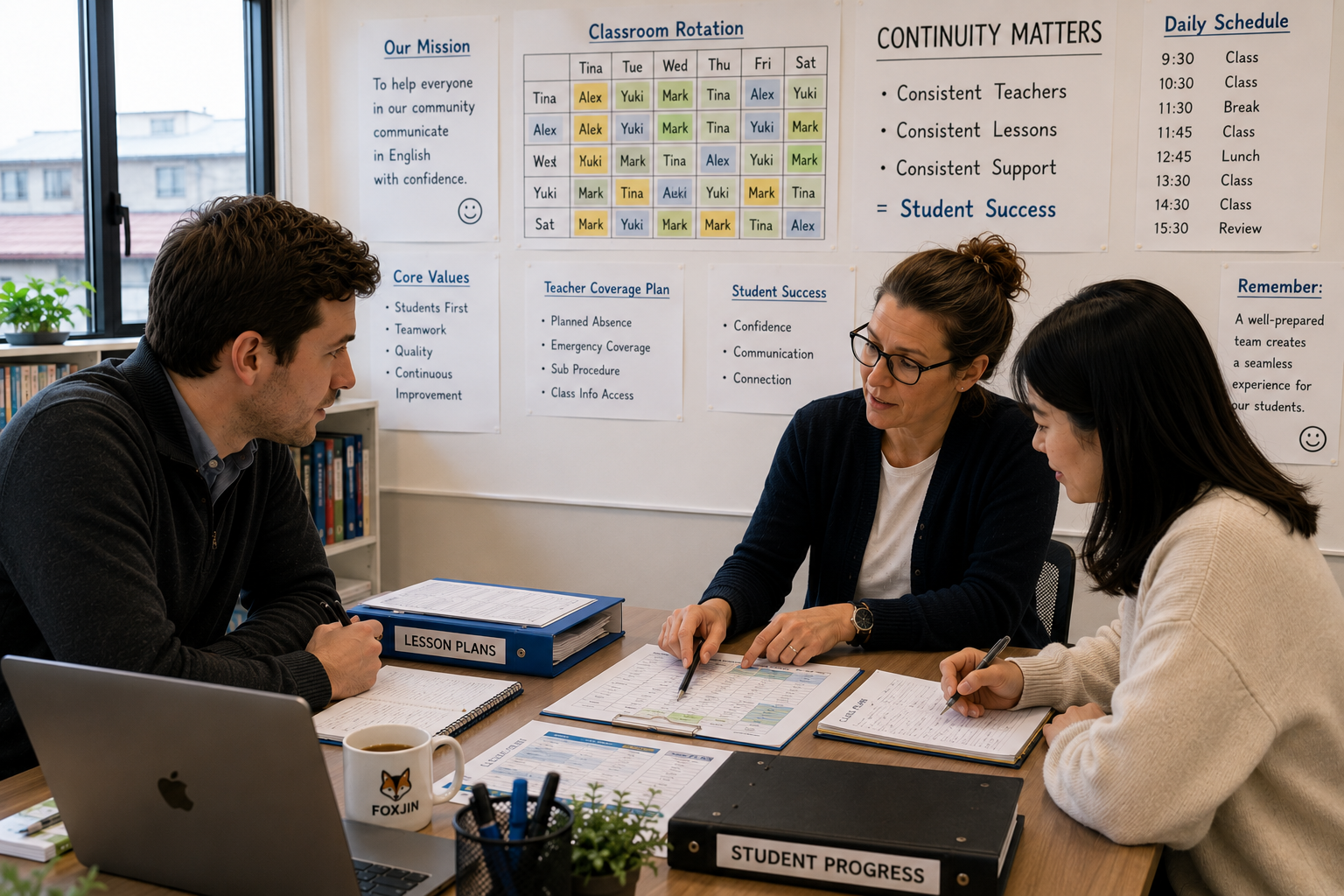
Lesson continuity can be supported through organized materials, clear class notes, substitute-friendly lesson plans, and access to temporary teacher support when needed.
Supporting the remaining staff
Shortages often place extra emotional and operational pressure on the people who remain. Staff may need to cover unfamiliar tasks, manage parent questions, handle schedule changes, or support classes outside their usual role.
A prepared system protects staff by reducing guesswork. It helps everyone understand what needs to happen next.
Planning beyond the emergency
After the immediate shortage is handled, schools should review what happened. Which classes were most vulnerable? Which materials were difficult to find? Which communication steps worked well? Where did staff need more support?
These answers can help the school build stronger systems for the next challenge.
Key takeaways
- Staff shortages affect the whole school operation.
- The first response can shape the rest of the day.
- Lesson continuity protects parent trust.
- Remaining staff need clear systems and support.
- Every shortage can reveal ways to prepare better.
Where Foxjin fits
Foxjin helps schools maintain classroom continuity when staffing shortages create pressure. By providing direct English teacher support, Foxjin gives schools time to stabilize operations and make thoughtful next decisions.
The goal is simple: keep lessons moving while the school handles the situation responsibly.
Need support during a staff shortage?
Foxjin helps English schools maintain classroom continuity during staffing gaps, urgent absences, and operational pressure.
Contact Foxjin